The Complete Guide
The History of Tattooing
Tattooing is one of humanity’s oldest and most widespread art forms. The oldest physical evidence, the preserved skin of Ötzi the Iceman, dates to around 3300 BC, and tattooed bodies have been found on nearly every inhabited continent, often arising independently. This is the long arc of that story: from ancient mummies and the world’s living Indigenous traditions, through the Western trade and the invention of the electric machine, to the twentieth-century masters and the explosion of modern styles.
Timeline at a glance
Ancient Origins
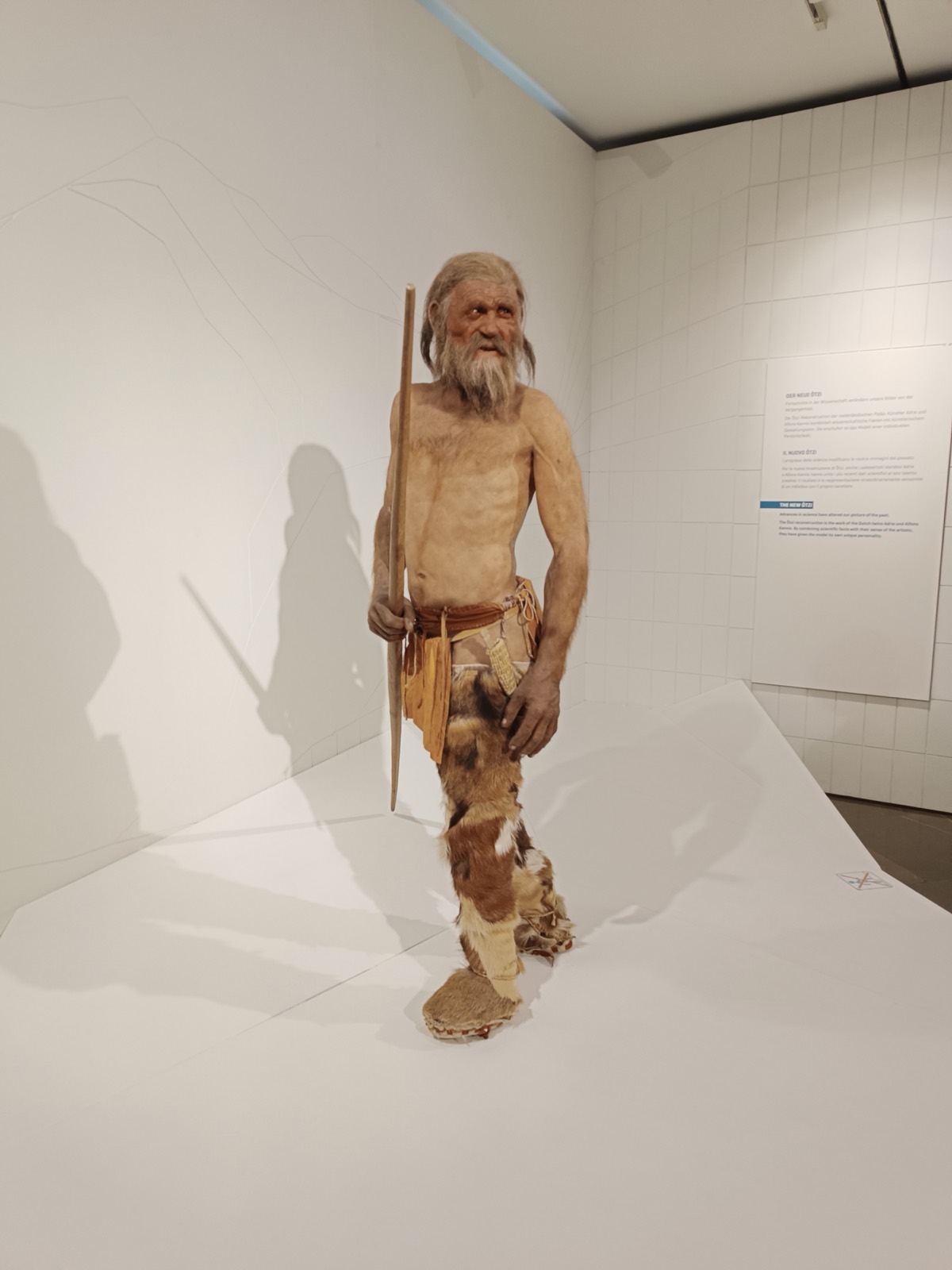
The story of tattooing does not begin with a written record but with preserved skin. The oldest confirmed example belongs to Ötzi the Iceman, a Copper Age man who died around 3300 BC and lay frozen in a glacier on the Tisenjoch pass in the Ötztal Alps until hikers found him in 1991. His body carries 61 tattoos in 19 groups, clustered over the joints and the lumbar spine, exactly where later skeletal analysis found degenerative disease. That pattern is why therapeutic intent remains the leading reading of his marks.
Egypt offers the next clear case. Amunet, Priestess of Hathor, was excavated at Deir el-Bahari near Thebes in 1891 and documented soon after, making her the first professionally recorded Egyptian tattoo case. Her abstract patterns of dots and dashes ran across the thighs, lower abdomen, and arms, and scholars have read them through Hathoric fertility ritual rather than as writing or pictures. Centuries later on the Eurasian steppe, the Princess of Ukok, a Pazyryk Scythian woman dated to roughly the 5th to 3rd century BC, was lifted from a frozen barrow on the Ukok Plateau in 1993, her arms bearing the stylized animal designs that echo Pazyryk metalwork and textiles.
The evidence then reaches across the world. The Momia Tolteca, a naturally mummified woman found in a Oaxaca cave in 1889 and later dated near 250 CE, preserves zoomorphic and geometric tattoos on her forearms and abdomen, the oldest direct physical evidence of tattooing in Mexico. In the Arctic, the Cape Kiyalighaq Mummy, a Yupik woman who died around AD 405 on St. Lawrence Island, gave up dark blue tattoos on her hands and forearms only under infrared light. And on the Peruvian coast, the Lady of Cao, a Moche ruler buried around 450 to 500 AD, carried spiders, snakes, crabs, and feline moon animals across her forearms, hands, and feet. Together these bodies show tattooing as an ancient and independent practice across many cultures, long before any culture wrote its history down.
The World's Living Traditions
Across the world, Indigenous and regional peoples have carried tattooing as law, lineage, and protection rather than decoration. Nowhere is the thread more continuous than in the Pacific. Polynesian Tatau in Sāmoa is the one hand-tap tradition that was never legally outlawed and never lost its hereditary chain of masters, the tufuga ta tatau, who strike a serrated comb into the skin to build the men's pe'a and women's malu; the Sāmoan word tatau gave English the word tattoo. Its neighbors fared harder. The Māori of Aotearoa carry Ta Moko, alone in Polynesia grooving the skin with a bone chisel to encode a wearer's genealogy and rank, while Marquesan Tattooing and Hawaiian Kākau were driven near to extinction by colonial and missionary pressure and rebuilt through later revivals.
Asia holds traditions of comparable depth. Japanese Irezumi is the large-scale pictorial form codified in Edo-period Japan and survived a 76-year Meiji ban. In Borneo, Iban Borneo Tattooing read a man's skin as a biographical ledger of travel and standing, and high in the Philippine Cordillera, Kalinga Batok is the only highland tradition there that never broke, still tapped by hand.
In the circumpolar Arctic, Inuit Kakiniit and Tunniit marked women's faces and bodies for at least 3,500 years before suppression broke the craft and a revival carried it back. Related Indigenous lines run through the Ainu Sinuye of Hokkaido and Sakhalin and the heraldic Tlingit Crest Tattooing of southeast Alaska. Across North Africa, Amazigh (Berber) Tattoos and Nubian Female Tattoos of the Middle Nile preserve some of the oldest women's marking traditions on record.
The Western Trade and the Electric Machine
The West did not invent tattooing so much as find a word for it. When HMS Endeavour anchored at Matavai Bay, Tahiti, in 1769, the naturalist Joseph Banks watched the Polynesian practice closely and set it down as a craft and a culture rather than a curiosity. His journal entry of July 5, 1769 holds the first known written use of "tattow" in English, adapted from the Polynesian tatau, the moment recorded in Cook Records "Tatau". Before then European languages had only pricking, marking, or staining, with no single term to hold the practice together. The botanical artist Sydney Parkinson, also aboard the Endeavour, gave that word a picture, making the earliest detailed European drawings of Polynesian and Maori tattoos and being marked himself in the Society Islands before he died on the voyage home in 1771.
For most of the nineteenth century the marked body reached American audiences as spectacle. James F. O'Connell, exhibiting at P.T. Barnum's American Museum from 1842, is documented as the first tattooed man shown in the United States, and his survival narrative set the template of the traveler tattooed against his will. Captain George Costentenus, covered in roughly 388 tattoos and touring with Barnum's Greatest Show on Earth in 1876 and 1877, carried the same exotic-origin tale to its largest stage.
The working trade settled in lower Manhattan. Martin Hildebrandt, a German-born sailor who learned tattooing in the US Navy in the 1840s and built his clientele among Civil War soldiers, opened what is documented as probably the first permanent American tattoo shop, off Oak Street in the Fourth Ward, in 1870 or 1872, as recorded in First U.S. Tattoo Shop. He worked entirely by hand-poke. The mechanization came a few blocks away: as recorded in Electric Machine Patented, Samuel O'Reilly received U.S. Patent No. 464,801 on December 8, 1891 for the first electric tattooing machine, built from Edison's 1876 electric pen, turning the slow hand trade into a powered one at 5 Chatham Square on the Bowery.
The Bowery also standardized the designs and the performers. Around 1905 Lew Alberts, a former wallpaper designer working beside Charlie Wagner at Chatham Square, became the first to design and sell printed flash sheets, setting the old maritime set of anchors, swallows, hearts, and ships beside new American motifs and seeding the American Traditional canon. The era's tattooed ladies came up in the same district, Nora Hildebrandt, hand-poked by Martin and debuting in 1882, and her rival Irene Woodward, billed as "The Original Tattooed Lady" the same year. The photographer Charles Eisenmann, working a studio at 229 Bowery from 1879, made the cabinet cards that remain the most complete visual record of those early Western tattooed bodies on exhibition.
The Twentieth-Century Masters
Modern tattooing was built on a machine and a stretch of New York pavement. In 1891 Samuel O'Reilly patented the first electric tattooing machine, adapted from Edison's electric pen, turning the slow hand-poke trade into a powered commercial practice from his Bowery shop at Chatham Square. His likely apprentice Charlie Wagner patented the vertical-coil machine in 1904, the layout nearly every coil machine has run on since, and ruled Chatham Square for half a century. Working beside him, Lew Alberts around 1905 became the first to design and sell printed flash sheets, Americanizing the sailor tattoo and helping build the American Traditional canon. That canon hardened in the Navy towns: August "Cap" Coleman opened in Norfolk, Virginia in 1918 and built the bold-line, heavy-color Norfolk style on sailors' skin, mentoring Paul Rogers, who coined the word "irons" for the machines and co-founded the Spaulding and Rogers supply house. Bert Grimm, the Grandfather of Old School, tattooed for sixty-nine years and left flash that remains the template for the style.
The trade's reach widened from there. Maud Wagner, an aerialist who traded a date for a lesson at the 1904 St. Louis World's Fair, became the first widely documented female tattoo artist in the United States. From Honolulu's Hotel Street, Norman "Sailor Jerry" Collins ran the busiest shop in America, fusing American flash with the composition of the Japanese tradition rooted in Utagawa Kuniyoshi, whose 1827 Suikoden prints fixed the iconographic vocabulary of irezumi. Collins trained the men who launched the Tattoo Renaissance. Lyle Tuttle turned the 1961 New York ban into national press and began preserving the trade's history, while Don Ed Hardy, a printmaker who turned down a Yale fellowship, traveled to Japan and brought its studio approach home through the shops, press, and museum shows that made American tattooing an art.
Two deeper lineages ran beneath the renaissance. The Japanese path moved through Phil Sparrow, the English professor who tattooed Chicago sailors, kept written records of a trade that left none, mentored Cliff Raven, and pointed Hardy toward Japanese work; in Yokohama, Horiyoshi III spent years copying ukiyo-e before becoming the most documented living master of irezumi. The Chicano single-needle black-and-grey path came out of California prisons: Freddy Negrete carried it from the reformatory system into Good Time Charlie's Tattooland, where Jack Rudy translated the prison aesthetic into a repeatable studio technique. Mark Mahoney carried that style to the Sunset Strip, where Dr. Woo later turned fine-line work into the look of the Instagram age. Meanwhile Mike Malone bought Sailor Jerry's Honolulu shop and renamed it China Sea Tattoo, and Leo Zulueta, encouraged by Hardy, pioneered neo-tribal tattooing by pulling Bornean and Marquesan geometry into Western practice. These are the figures the story turns on; the full roster lives in the Atlas.
The Modern Era and the Rise of Styles
From the 1980s onward, tattooing in studios fractured into a wide field of distinct, recognizable styles, each with its own founders, vocabulary, and following. Leo Zulueta is credited as the primary pioneer of neo-tribal tattooing in the West, pulling Bornean and Marquesan geometry into Western studio practice, and that blackwork impulse later carried into the dense dotwork and ornamental geometry of artists such as Tomas Tomas and Thomas Hooper. Guy Aitchison helped build the bio-organic register and taught it through Reinventing the Tattoo, while Paul Booth made dark, demonic imagery into a signature look at New York's Last Rites, and color realists like Yomico Moreno and portrait artists like Shane O'Neill pushed painterly photo-realism on skin.
Other lineages ran in parallel. Filip Leu proved the West could build full Japanese-style bodysuits to a master standard, and Horitaka anchored the Yokohama lineage in America through State of Grace. In Los Angeles, fine-line lettering and Chicano black and grey went global through Mister Cartoon, Big Sleeps, and Jose Lopez, while Dr. Woo took single-needle black-and-grey work and made it the look of the Instagram age. Europe added new graphic directions: Xoil originated the collage-driven graphic style, Chaim Machlev built flowing geometric blackwork as DotsToLines, and Maxime Plescia-Buchi made typographic blackwork that reads as architecture on skin. Valerie Vargas meanwhile became known for neo-traditional work that updated classic forms.
This spread was carried by a maturing public culture. New York lifted its decades-long tattoo ban in 1997 (NYC Lifts the Ban), and large juried gatherings such as the Mondial du Tatouage in Paris and the London Tattoo Convention brought the best of these styles together in one room. Each of these styles now has its own tattoo styles guide, and you can compare them side by side.
The oldest tattooed remains
The deepest evidence for tattooing is the body itself. These are the best-documented ancient tattooed remains, oldest first, with the caveats the record demands.
| Find | Date | Place | Evidence | Tattoos | Caveat |
|---|---|---|---|---|---|
| Ötzi the Iceman | ~3300 BC (Copper Age) | Ötztal Alps, Austria/Italy border | Glacial mummy | 61 short lines and crosses over joints/lumbar spine | Acupuncture-meridian reading disputed; therapeutic intent accepted |
| Amunet, Priestess of Hathor | ~2051-2000 BC (Dynasty XI) | Deir el-Bahari, Thebes, Egypt | Egyptian mummy | Abstract dot-and-dash patterns on thighs, abdomen, arms | Fertility-ritual reading is scholarly interpretation, not settled |
| Chinchorro Mummies | ~1880 BCE (range 2563-1972 cal BC) | El Morro, Arica, Atacama coast, Chile | Desert / artificially mummified body | Line of black dots across upper lip (moustache) | Old 6000 BCE date a transcription error; not world's oldest |
| Princess of Ukok | ~5th-3rd century BC | Ukok Plateau, Altai Mountains | Frozen kurgan (permafrost) mummy | Stylized deer with bird/griffin-head antlers on shoulder and arm | 2014 breast-cancer MRI claim non-peer-reviewed, preliminary |
| The Momia Tolteca (Oaxaca) | ~250 CE (Classic period) | Cave near Santa Maria Camotlan, Oaxaca | Naturally mummified body | Zoomorphic and geometric tattoos on forearms and abdomen | Misnamed; Batres wrongly called her male and Toltec |
| The Cape Kiyalighaq Mummy | ~AD 405 (±70; Old Bering Sea) | St. Lawrence Island, Sivuqaq, Alaska | Frozen Yupik body | Dark-blue dots, lines, flanged hearts on forearms, hands, fingers | n/a |
| The Lady of Cao | ~450-500 AD | Huaca Cao Viejo, Chicama Valley, Peru | Naturally mummified body (arid coast) | Spiders, snakes, crabs, feline moon animals on forearms, hands, feet | Death in mid-20s from childbirth held as likelihood, not settled |
| The Chiribaya Tattooed Woman | ~900-1350 CE | Chiribaya Alta, Osmore Valley, southern Peru | Desert-dried mummy | Soot birds, apes, reptiles; 12 plant-pigment circles on neck | Therapeutic reading of neck circles is a careful inference |
| The Qilakitsoq Mummies | ~1475 CE (late Thule) | Uummannaq Fjord, Greenland | Cold-preserved Inuit bodies | Blue-black facial lines over brows, nose, chin on five women | Youngest woman bore none; read as life-stage marker |
Myths and misconceptions
Myth: The Picts and Celts were famously a tattooed people who covered themselves in blue woad designs.
Every claim that Picts, Britons, and Gauls tattooed themselves traces back to a handful of classical writers (Caesar in De Bello Gallico, plus Herodian, Solinus, and Isidore of Seville), not to a single marked body recovered from British or Gaulish ground. The Latin and Greek terms those sources use do not cleanly separate painting from tattooing, and the name 'Picti' simply means 'painted people.' No preserved Iron Age European body has yet turned up with confirmed tattoos, and Gillian Carr's 2005 work argues woad is chemically a poor permanent pigment that fades rather than holding under the skin.
Sources: pictish celtic claims, otzi
Myth: The West invented tattooing, or Captain Cook's crew 'brought tattooing back' to Europe in the 1700s.
What the 1769 Endeavour voyage produced was a word, not an origin. When HMS Endeavour anchored at Matavai Bay, Tahiti, the crew encountered a living Polynesian tatau tradition that was already old, and Joseph Banks's journal entry of July 5, 1769 holds the first known written use of 'tattow' in English, adapted from the Polynesian tatau ('to strike or to mark'). Europe had no single word before this and described the practice as pricking, marking, or staining; the encounter named and circulated the practice in English rather than originating it.
Sources: cook 1769, joseph banks, polynesian tatau
Myth: Modern tattooing started with sailors who picked it up in the Pacific.
Pacific contact did make tattooed bodies highly visible to Europe, but framing it as the start of tattooing overstates the case. Mai (Omai) of Ra'iatea reached London in 1774, and his tattooed hands and back became the most closely watched living example of Polynesian tattooing a European audience had seen, helping shift European feeling from criminal stigma toward curiosity. This was a moment of reception and visibility, not the invention of a practice that the same records show was already a continuous hereditary tradition in Polynesia.
Sources: omai, joseph banks, polynesian tatau
Myth: Otzi the Iceman has the oldest tattoos in the world, full stop / he proves tattooing began in the Alps.
Otzi holds the oldest verified and best-examined tattoos on surviving human skin, dated to roughly 3370 to 3100 BC, with 61 marks clustered over joints and the lumbar spine where his bones show degenerative disease. The careful phrasing is 'oldest confirmed tattooed remains,' a claim about preservation, not a claim that tattooing began with him. Deter-Wolf and colleagues' 2016 work placed Otzi ahead of the Chinchorro 'moustache mummy' only after correcting a transcription error that had wrongly aged the Chinchorro specimen, which shows how the 'oldest' title rests on what skin happens to survive and on dating, not on a single birthplace.
Sources: otzi, otzi discovered, chinchorro mummies
Myth: Tattooing has one birthplace or a single point of origin.
The entries point instead to multiple independent ancient traditions across distant regions rather than one source. Marked skin survives on Copper Age Otzi in the Alps (c. 3300 BC), on the Chinchorro 'moustache mummy' on the Atacama coast of Chile (calibrated c. 2563 to 1972 BC), and in documented Egyptian cases such as the priestess Amunet at Thebes, while Polynesian tatau is a separate hereditary hand-tap tradition. These records sit in different places and emerge from different cultures, which is why the evidence supports many origins rather than a single inventor or homeland.
Sources: otzi, chinchorro mummies, amunet, polynesian tatau
Glossary
- tatau
- Samoan tatau is the Polynesian hand-tap tradition that never broke, in which hereditary masters called tufuga ta tatau strike a serrated comb into the skin to build the men's pe'a and women's malu, and the Samoan word tatau is what gave English the word tattoo.
- ta moko
- Ta moko is the customary skin-marking tradition of the Maori of Aotearoa New Zealand which, alone in Polynesia, grooves the skin with a bone uhi (chisel) struck by a mallet instead of puncturing it, with each moko encoding the wearer's whakapapa, iwi, and mana.
- irezumi
- Japanese irezumi is the large-scale pictorial tattoo tradition codified in Edo-period Japan, hand-poked with tebori needles and organized around a main subject, seasonal motifs, and an untattooed border, that survived a 76-year Meiji ban.
- tebori
- Tebori, meaning hand carving, is the traditional Japanese hand-poke tattooing technique built on the nomi (a handle bound with a silk-lashed needle bundle), in which the master kneels beside the reclining client and drives each insertion by hand rhythm.
- batok (Kalinga)
- Kalinga batok is the Cordilleran highland tattoo tradition, the only one of these highlands that never broke, in which a thorn lashed to bamboo is tapped into the dermis by hand.
- kakiniit
- Kakiniit are Inuit body tattoos, applied by skilled seamstresses across Inuit Nunangat and Greenland for at least 3,500 years.
- tunniit
- Tunniit are the Inuit women's facial marks, the chin lines, forehead Y, and cheek arcs, applied by skilled seamstresses across Inuit Nunangat and Greenland for at least 3,500 years.
- sak yant
- Sak yant (Khmer sak yantra) is the Southeast Asian protective-tattoo tradition in which a master drives sacred Old Khmer script into the body with a long needle while reciting Pali, then blows on the finished work to switch its protection on.
- deq (Kurdish)
- Kurdish deq, also called xal, is the voluntary hand-poke body marking carried by Kurdish women across southeastern Turkey, northern Iraq, northwestern Iran, and the Syrian Kurdish belt, using soot mixed with breast milk driven in with bundled needles to make chins, brows, and hands into a permanent language of protection, identity, and belonging.
- wasm/daqq (Bedouin)
- In Bedouin body marking the vault keeps the two apart: wasm is the tribal brand, a heated iron called the misam pressed into camels and livestock and sometimes onto people as a raised scar, while daqq is the women's hand-poke face and hand tattooing of the Levant, Arabia, Sinai, and Iraq.
🌍 Every figure, find, and tradition above is a pin you can spin to on the interactive globe. Explore the 3D Tattoo History Atlas →
Common questions
How old is tattooing?
At least 5,000 years. The oldest physical evidence is Ötzi the Iceman, a Copper Age man who died around 3300 BC, whose preserved body carries 61 tattoos in 19 groups.
Where does the word "tattoo" come from?
From the Polynesian word "tatau." The naturalist Joseph Banks recorded the first known English use, "tattow," in his journal on 5 July 1769, during Captain Cook’s first voyage to Tahiti.
When was the electric tattoo machine invented?
Samuel O’Reilly patented the first electric tattooing machine on 8 December 1891 (U.S. Patent No. 464,801), adapting it from Thomas Edison’s electric pen.
What is the oldest continuous tattoo tradition?
Samoan tatau is the one Polynesian hand-tap tradition that was never legally outlawed and never lost its unbroken hereditary line of tufuga ta tatau masters.
Did the Picts and Celts really tattoo themselves?
It is far less certain than usually claimed. The idea rests on a few classical writers whose words do not clearly separate painting from tattooing, and no preserved Iron Age European body with confirmed tattoos has been found.
Did tattooing develop in one place or many?
Many. Tattooed remains have been found across Europe, Asia, the Americas, the Pacific, the Arctic, and Africa, with traditions arising independently long before written history.